Garden days – and nights
The garden is finally looking green and healthy, lots of growing things.
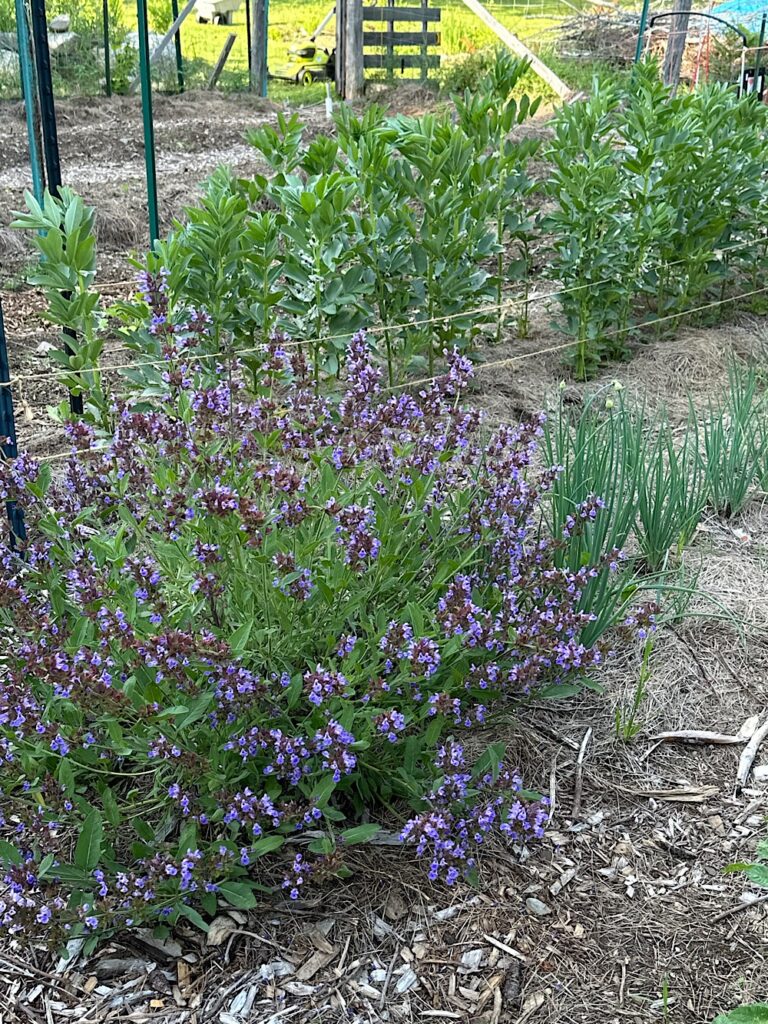
I planted this sage plant last year. It was about half this size. This spring it came back from a shriveled, dried-up husk, became huge and then bloomed with vivid purple flowers all over it. The bumblebees love it. Behind it there’s a row of fava beans in bloom, black-and-white flowers. To the right, a long row of Dutch Red Shallots. I planted them last year in November and then forgot I did so. When I raked the hay off that bed this spring, I was surprised to find a regular, orderly row of onion-like baby plants. It took me a few weeks to realize they were shallots that I planted last year. Surprise! I remember being intrigued by another crop similar to garlic that could be planted in the fall for harvest next year. I’m glad to have them, mystery solved, now to see if I enjoy cooking with them.
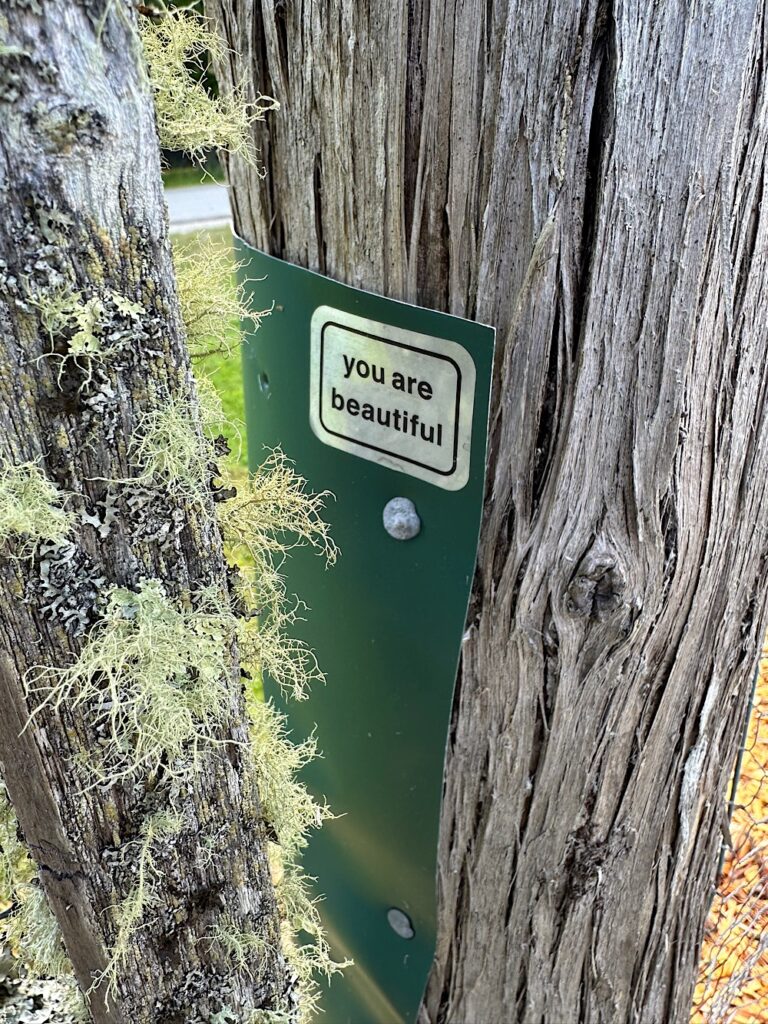
The other day, I noticed this sticker on the doorframe of one of the gates at the Community Garden. I was touched by it. I can imagine it might be sending a message to the lichen on the other post, which is, in fact, very beautiful.
We were cleaning up the circle garden, especially around the edges, and noticed that the St. John’s Wort was essentially eaten down to nothing. I’m not very fond of it, so I didn’t mind that much but I was puzzled by what happened. We noticed one sprig of it still had leaves and was covered with small, black, very shiny beetles. The culprit! I was finally able to capture a photo of them, using a plank as a background to force the camera to focus on the sprig.
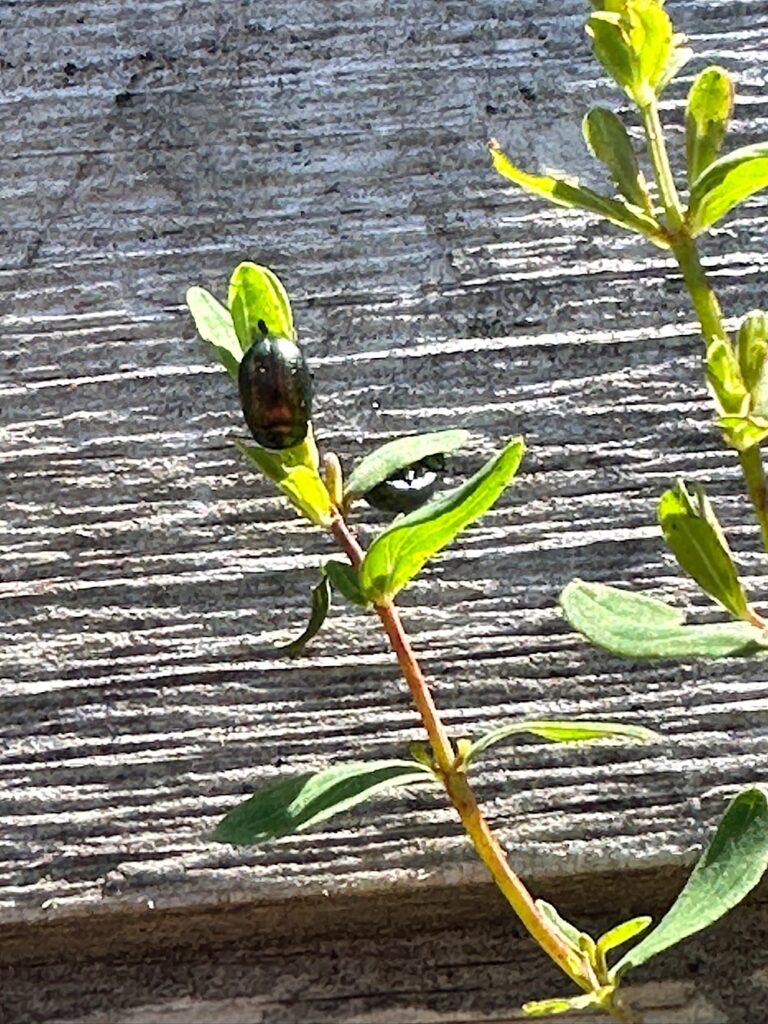
I didn’t know if they were dangerous to other plants, or if they were worthwhile insects that should be encouraged, so I spent some time researching them. It turns out St. John’s Wort has its own beetle, the St. John’s Wort Beetle. It’s very host-specific so it should only affect that plant. It was imported in the 1940’s as a biological control for invasive St. John’s Wort which is toxic to animals and causing a lot of damage to western ranches. Fascinating. I will probably dig out the St. John’s Wort and say goodbye to it and its beetles. I didn’t plant it in this garden. It came in with something else.
This is what the circle garden is for; it’s serving its purpose. To observe plant and insect interactions and evolve a garden that is healthy and beautiful in this location and also supports pollinators. So – success!
Here’s what the circle garden looks like today.
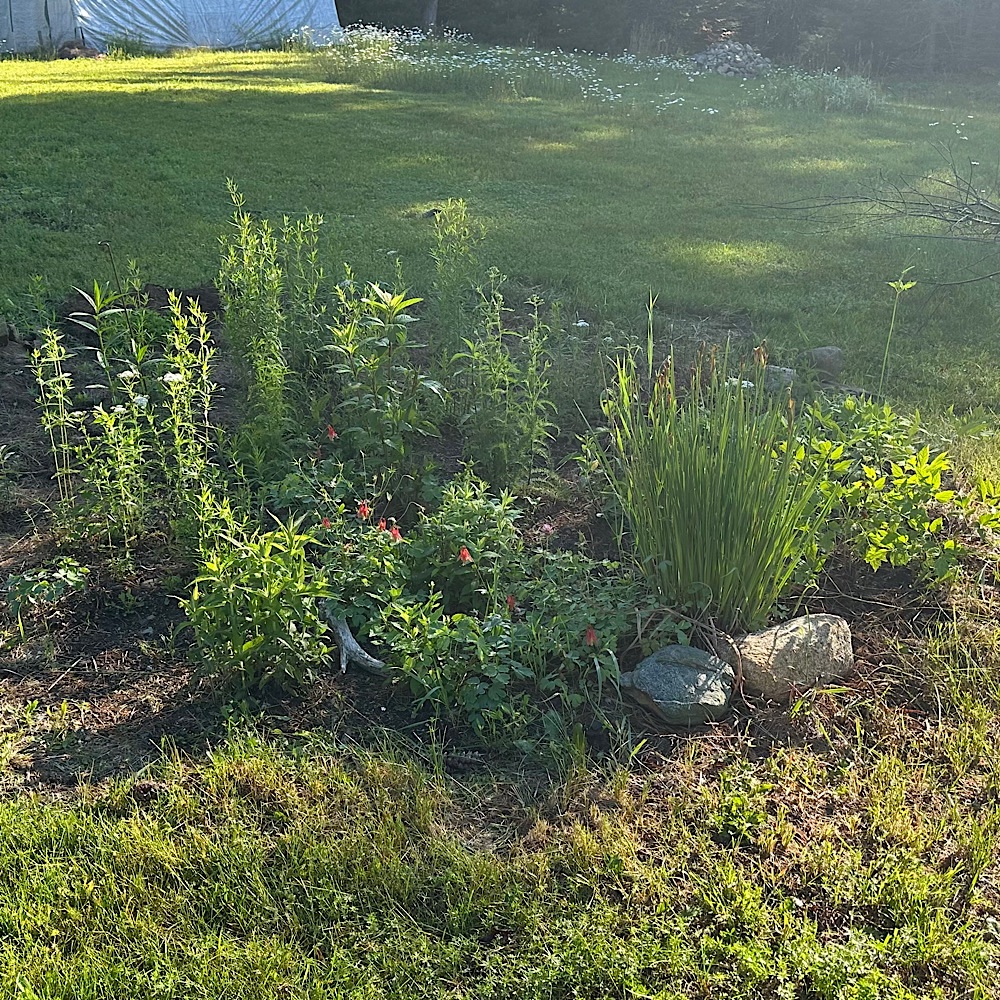
It’s hard to distinguish plants with this photo, but it’s doing well. The small red flowers are columbine. The blue flag iris flowers have gone by. The black cohosh all the way to the right has spread and is getting ready to produce spires of white flowers. The mountain mints and the milkweed are getting ready to bloom. I enjoy keeping my eye on this garden and observing what’s going on.
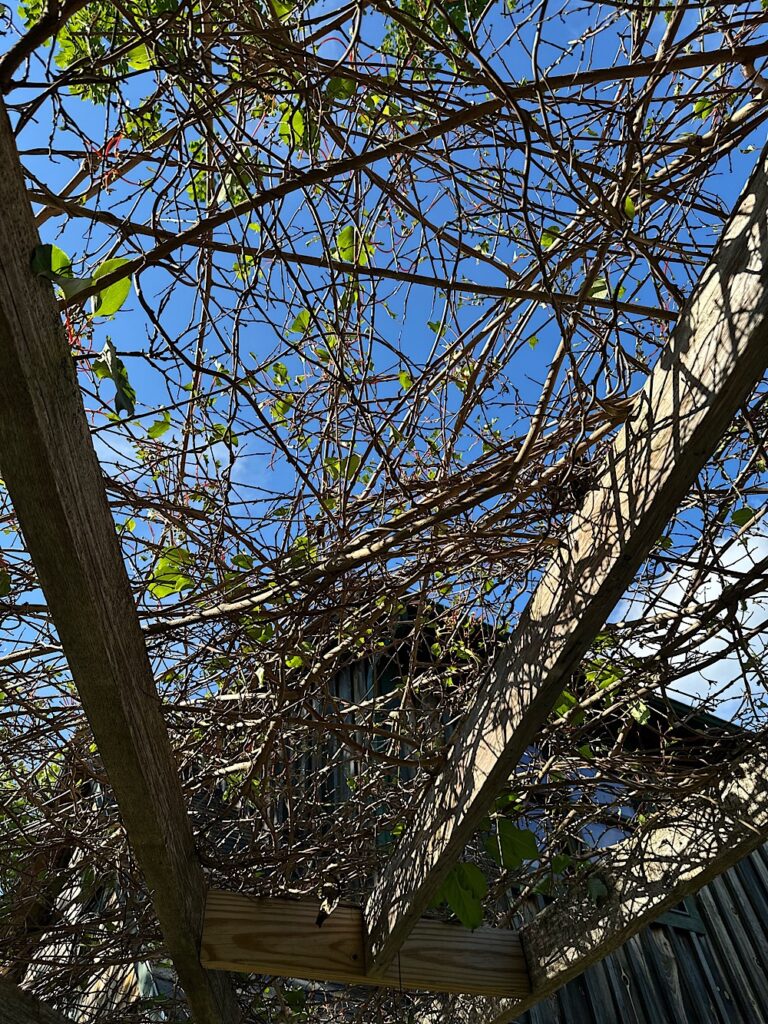
Meanwhile, another pest has been busy. This one’s a mammal – a young adult porcupine. He has especially lanky legs and seems very agile and eager. He came around three nights in a row and managed to climb up our arbor and eat all the leaves and flowers off the hardy kiwi vine. The deck underneath has been littered with sticks and remnants, as well as a little poop and a few telltale quills. Sam finally secured the chicken wire around the pillars that had been deterring porcupines for a few years. Our current visitor either was foiled or decided there wasn’t that much left and moved on. I’m pretty confident this hardy vine will regrow a leafy canopy that keeps the sun off us for the few hot months coming up.
Catherine~ The sage is so pretty! A favorite of mine. We found a big sprig of it on the trail at the bridge today and brought it home 🙂 Glad you got your pest issues addressed.
I love the sage plant. The flowers have already gone by, but they were spectacular while they lasted.